 |
|
|
 |
||
          |
|
|
|
Blog Exhibitions Researcher Reflections |
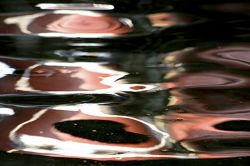
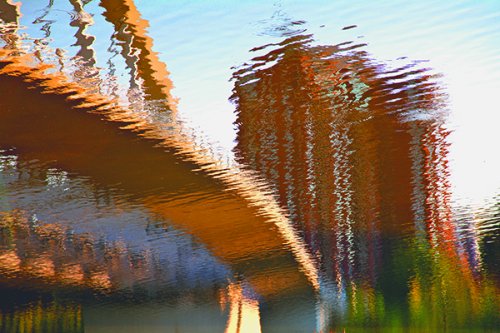
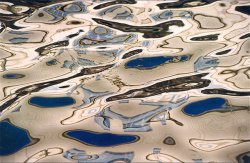
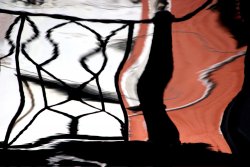
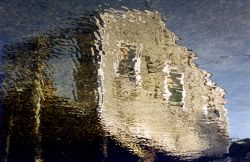
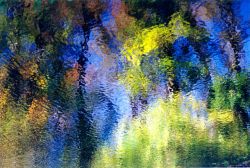
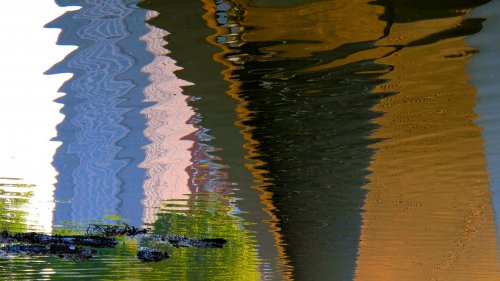
ABSTRACTS OF RECENT LECTURES Vanderbilt University Department of Psychology Nashville, Tennessee October 1–3, 2010 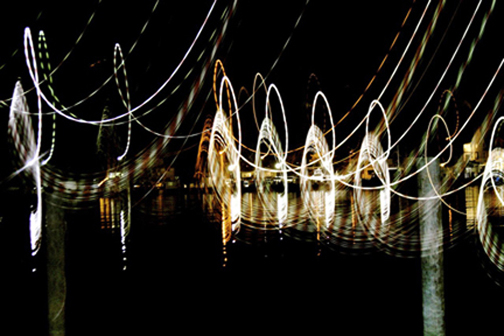 Telephone Ring / Cancan Dancers Fonts and Other Voices: Personification in Synesthesia There are certain fonts I’m a little afraid of while others exactly match what I need to say when I need to say it. What does this mean? Well, I could pick each font apart to offer graphic reasons why I have these emotional reactions – for example, that the shapes of the font Courier make me nervous (too many tiny spaces between black lines) whereas those of Comic Sans feel comfortable (no right angles to interrupt my thought). But are these answers really the point? The questions I’d rather answer are: why do I respond to fonts in the first place; to what degree is my Synesthesia responsible; and what role does personification play? I have multiple forms of Synesthesia. While colored graphemes is not one, I do respond to letters and numbers which have gender and personality, but that is not surprising considering that nearly everything I look at has gender and personality. I automatically personify what I see, a reaction perhaps most notable in my photography where I take pictures of reflections on water. I click the shutter when I hear a chord of color, feel texture on my skin or feel my body bend to the shapes. I also personify my subjects. The houses I take pictures of are never just houses. They are people while their windows are eyes. Is this reaction related to my reaction to fonts? I hope to answer that question along with the others in my presentation at the conference.
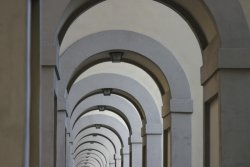
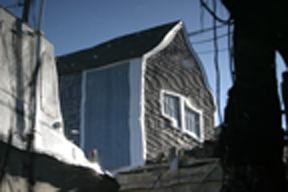 Grey Eyes by Marcia Smilack What Does A Metaphor Look Like? I asked a friend what a metaphor looks like to her, explaining that for me, a metaphor has four compartments. She said her metaphor has just two, like a room with a window, which made no sense until I had this dream. We entered a cottage and immediately the door flew shut. When I touched the handle, the door dissolved and became the wall. So, I tried the window, but it too dissolved and became the wall. Sealed inside, I said, “Well, I guess we are inside your metaphor now.” University of South Florida St. Petersburg, Florida January 26-28, 2007 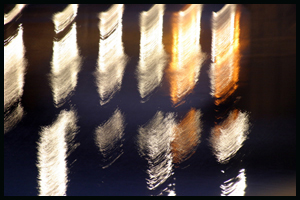 Furry Light / Chimes by Marcia Smilack The Language of Synesthesia I am a bi-directional synesthete who experiences multiple forms of synesthesia. I photograph reflections on moving water and click the shutter at the moment I experience a texture or sound response. For that reason, a researcher asked for my input on his invention to convert images of one's surroundings into sound to help blind people see. I sent him photographs of sounds which I selected from the thousands of photos I have taken in the last twenty years that document my synesthetic responses. However, he explained that as no two synesthetes perceive the same way, my images were most likely not universal enough to be useful for his purposes. But that planted an idea in me. Were there any universals? I sorted my images into two piles, putting the sound pile in front of me, shoving the texture pile to the side because I didn't expect to use it. Suddenly, I heard the sound of chimes, only it was coming from the wrong place: peripherally seen, the top image of the texture pile was eliciting the chime sound. When this happened a second time, I found my eureka moment. University of Texas 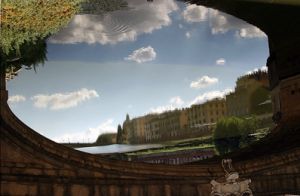 When A Window Is Also A Mirror A Dream: I am sitting at a semi-circular desk wrapped around my waist snug as a baby’s highchair. The desk is like any desk except for where it is: the middle of the ocean. I am dry as a landlocked scribe from the waist up, but from the waist down, my body is submerged. My chair is actually a bicycle, my feet touching pedals underwater. I discover a button on my computer that catapults me into live music without my having to get up from the chair, or bike, or out of the water. I am a female centaur, hooves replaced by aquatic wheels - half rider, half writer – which is why in waking life (I think later), when I mean to type “write” I see “ride” appear on my computer screen, as though my fingers think in homonyms and take dictation from voices I can’t hear. This dream provides the perfect metaphor for how synesthesia feels, although in waking life, I have no magic button to initiate the experience. I look to Nature instead, specifically reflections on water where light, at certain times of day, sends me into multiple modalities. I experience sound, texture, and motion but never voluntarily, so I put myself in the vicinity of where I know it might occur. My images elicit the same synesthetic responses every time I see them. By sharing them, I hope to transform Nature’s mirror into a useful window for us all. The College Art Association Annual Conference  Cello Music by Marcia Smilack The Synesthetic Sonar From Artist To Archetype: In a recent dream, I found myself standing inside a second floor shop in New York City where my eye was drawn to a large black square of canvas laid out on a table for display. Up close, I saw a scattering of tiny colors embedded in the folds of the cloth like sequins except they had no shine until I touched them. As soon as I made contact, they brightened and turned into musical notes. I found that if I rubbed my forearms on the cloth, paying particular attention to press my elbows into the colors, I could play piano music – - not music that was “like” piano music but music that WAS piano music. I was delighted to find a piano so lightweight I could roll it up and carry it with me like a painting. In waking life, I had a similar experience the first time I photographed cello music though perhaps I should first explain what it is I do. I photograph reflections on the surface of water and call myself a Reflectionist. I taught myself photography by shooting whenever I heard a chord of color, one of my synesthetic responses to what I see. On the night I took the cello image, the setting sun, reflected on the water, turned the skin of the sea to a golden hue that, in combination with the wave formation, created/creates for me the sound of cello, though the actual instrument was no more a cello than the dreamed piano.The difference between the two experiences came to me when a scientist who attended an exhibition of mine spoke about my cello image. He explained that it was no surprise I heard cello music since I had captured on film the exact sine waves produced by the sound of cello strings, an insight I found fascinating since I had no idea I had done any such thing, though it gave me this idea: that the synesthesia artists experience in their work operates like an internal sonar that takes them directly to the archetypal patterns we know exist in art as well as science; and that my images, which look like dreams from a collective unconscious, are evidence if not proof that the universe is dreaming. Institute of Cognitive and Brain Sciences 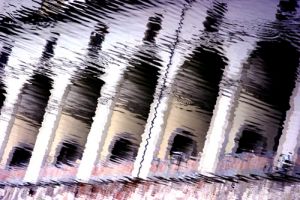 Singing Arches by Marcia Smilack Singing Arches The art presentation I will give at the Fourth American Synesthesia Association Conference is titled "Singing Arches." I intend to share a small collection of images which, like my usual works, are photographs I take of reflections on water. My images are not only inspired by my synesthetic responses to what I see, hear, and feel; they are, in fact, the direct result of those responses. |
|
Photo Galleries | Artist Statement | Resume | Bio | Abstracts | Video Clips | Synesthesia | Calendar | Links | Blog | Contact All images and text are Copyright ©
Marcia Smilack. All rights reserved. |
|
|